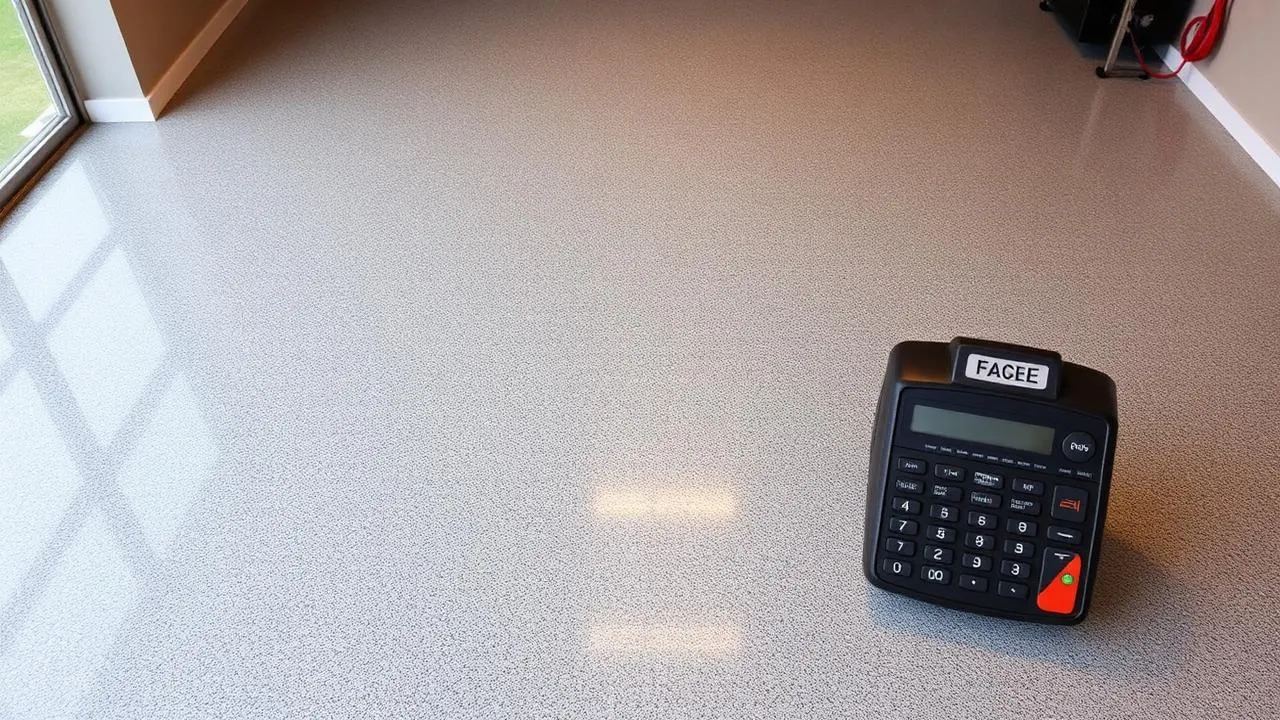
Will a Garage Floor Coating Peel in Florida? Hot-Tire Pickup, Moisture Vapor, and UV Explained
Ready to get started?
Call (904) 300-1558 or request a free, no-obligation quote — we typically respond the same day.
Short answer: A professionally installed garage floor coating should not peel in Florida — but a coating that isn't built for Florida often will. Nearly every Florida peeling problem traces back to three forces: hot tires lifting the coating, moisture vapor pushing up through the slab, and UV breaking down the top layer. A coating system that is designed to resist all three, installed over properly ground concrete, is built to last for the long haul.
Quick facts: Florida vs. your garage floor
- The 3 Florida threats: hot-tire pickup, moisture vapor from below, and UV/heat from an open garage door.
- Most peeling starts at the bond, not the surface — so concrete prep matters more than the brand of coating.
- Hot-tire pickup shows up as peeling in tire-shaped strips.
- Moisture vapor shows up as bubbles or blisters, often in low spots.
- UV damage shows up as yellowing, chalking, or a dull, faded top coat near the door.
- Defense: mechanical diamond-grinding prep, moisture testing, a strong bonding base, and a UV-stable top coat.
- JAX Epoxy Floors backs its residential garage coatings with a lifetime warranty.
Why do garage floor coatings peel in Florida more than in other places?
Florida stacks several stresses on one slab at the same time. Garage slabs here sit on sandy soil with a high water table, so moisture is always trying to move up through the concrete. Summer days are long and hot, and tires come home from hot asphalt and park on the floor. And because many Florida homeowners keep the garage door open, direct and reflected sunlight hits the front of the floor every day.
In a cooler, drier climate, a basic coating might survive one of these stresses. In Northeast Florida, it has to survive all three, all year.
What is hot-tire pickup, and why does it happen?
Hot-tire pickup is when a coating lifts off the concrete where your tires park. Here's the short version of how it happens:
- Tires heat up on the road and soften slightly.
- When a hot tire sits on a soft or thin coating, it grips the surface.
- As the tire cools and contracts, it pulls on the coating.
- Repeated day after day, a weak bond eventually lets go.
The tell-tale sign is two parallel strips of peeling that match where your vehicle parks.
How is a coating built to resist hot-tire pickup?
Three things matter most: a strong mechanical bond to the concrete (from diamond grinding, not acid etching), a coating system with enough build and hardness, and a top coat that is designed to handle heat. Thin, store-bought roll-on kits are the most common victims because they are often applied over a slab that was only cleaned or etched. See our comparison of diamond grinding vs. acid etching for why prep is the foundation.
How does moisture vapor make a coating bubble or peel?
Concrete looks solid, but it's porous. In Florida, groundwater and humidity mean vapor is constantly moving up through the slab. If a coating is sealed over a slab that's pushing out a lot of moisture, that vapor gets trapped underneath and builds pressure.
Signs of a moisture problem include:
- Bubbles or blisters, sometimes filled with liquid
- Peeling concentrated in low areas or along the slab edges
- A white, chalky residue under the lifted coating
How do installers prevent moisture-related failures?
The fix happens before the first coat goes down: test the slab, then choose a primer or base coat that suits the moisture level. If you want the details on how testing works, read why Florida humidity matters for concrete coatings and our guide to concrete moisture testing. The key takeaway for a homeowner: if a contractor never mentions moisture, ask.
Does Florida sun really damage a garage floor coating?
Yes — especially at the front of the garage. Ultraviolet light breaks down some coating chemistries over time. The result usually isn't instant peeling; it's yellowing, chalking, and a top layer that slowly loses its toughness. Once the top coat weakens, it's easier for heat, tires, and abrasion to do the rest.
This is why many Florida installers pair a strong bonding base with a UV-stable top coat. We cover the material differences in polyaspartic vs. epoxy, and you can see what we install on our polyaspartic garage floors and color flake epoxy pages.
Which matters more: the coating product or the installation?
The installation. A premium product applied over poorly prepared concrete can still fail, while a well-designed system over properly ground, tested concrete has the best chance of lasting. When you compare quotes, the questions about prep and testing tell you more than the brand name on the bucket.
What should I ask a contractor so my floor doesn't peel?
Use this checklist when you talk to any installer — including us:
- How will you prepare the concrete? Look for mechanical diamond grinding.
- Will you test for moisture? And what will you do if the reading is high?
- How do you handle cracks and spalls? They should be repaired before coating.
- What's the top coat, and is it UV-stable? Important for any garage with an open door.
- How do you guard against hot-tire pickup? Ask how the system is designed for daily parking.
- What does the warranty cover, and for how long? Get it in writing.
My floor is already peeling. What now?
If your existing coating is already lifting, patching over it rarely holds. Start with our guide to fixing a floor that's already peeling, which explains how to tell which of these causes you're dealing with.
Get a Florida-ready garage floor
JAX Epoxy Floors installs garage floor coatings across St. Johns County, St. Augustine, Nocatee, Ponte Vedra, Jacksonville, and Palm Coast. Every residential garage coating we install is backed by a lifetime warranty. If you'd like a coating built for Florida's heat, humidity, and sun, request a free quote or call (904) 300-1558.
Frequently Asked Questions
Will an epoxy garage floor peel in Florida?
It can if it's installed over poorly prepared concrete, over a slab with unaddressed moisture, or without a heat- and UV-resistant top coat. A properly installed system over diamond-ground, moisture-tested concrete is designed not to peel.
What causes hot-tire pickup on a garage floor?
Hot tires soften and grip the coating; as they cool, they pull on it. Over many cycles, a weak bond lets go, leaving peeling in tire-shaped strips. Strong mechanical prep and a heat-resistant system are the main defenses.
Why is my garage floor coating bubbling?
Bubbles or blisters often point to moisture vapor coming up through the slab and getting trapped under the coating. That's why moisture testing before installation is so important in Florida.
Does sunlight affect garage floor coatings?
Yes. UV exposure can yellow, chalk, or weaken some coatings over time, especially near an open garage door. A UV-stable top coat helps the floor keep its color and toughness.
Can a peeling garage floor be fixed?
Small, isolated spots sometimes can, but widespread peeling usually means the coating has to be removed, the cause corrected, and a new system installed. See our peeling floor guide for details.
Does JAX Epoxy Floors offer a warranty?
Yes. JAX Epoxy Floors backs its residential garage floor coatings with a lifetime warranty. Call (904) 300-1558 or visit https://jaxepoxyfloors.com/quote for details.
Related Posts
Ready to Transform Your Floor?
Get a free, no-obligation quote for your project in Jacksonville, St. Augustine, or Palm Coast.
Request a Free Quote