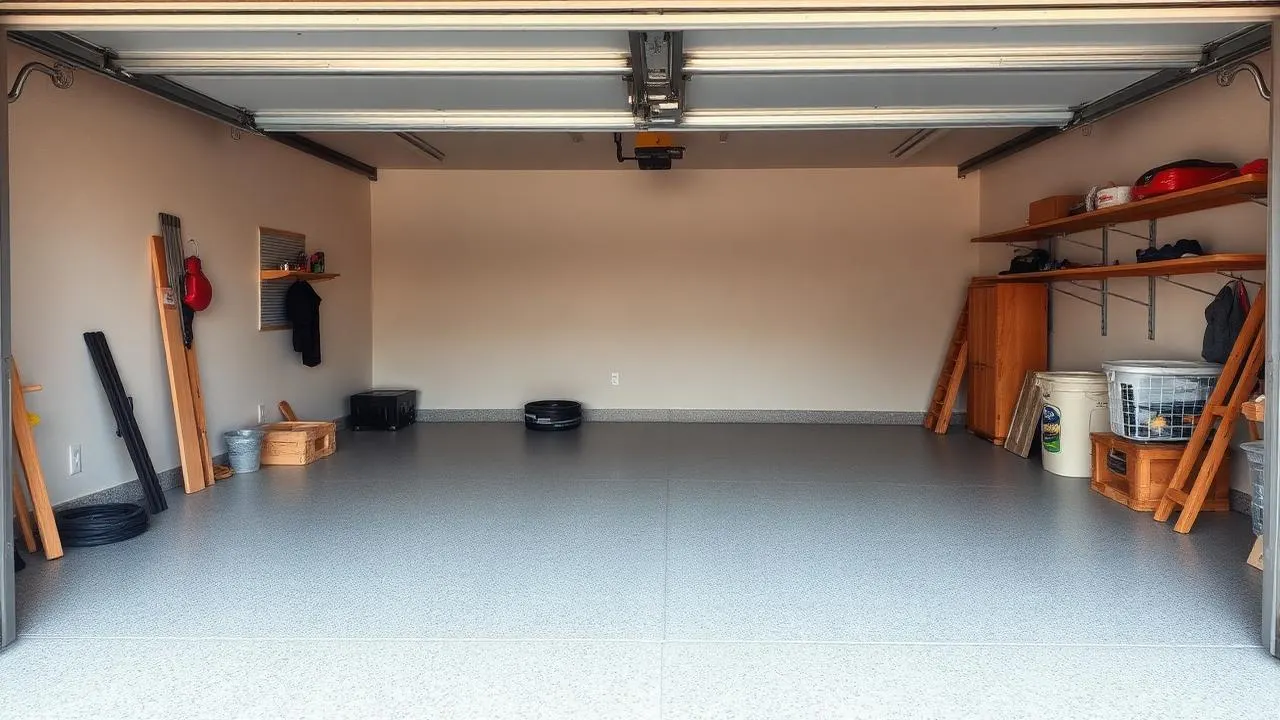
How Long Does a Garage Floor Coating Take in St. Johns County?
Ready to get started?
Call (904) 300-1558 or request a free, no-obligation quote — we typically respond the same day.
Short answer: Most residential garage floor coatings in St. Johns County are installed in one to three days on site, depending on the coating system and the condition of the concrete. You can usually walk on the floor within about a day, and park on it after the cure time your installer specifies — anywhere from a couple of days to about a week. Add a little planning time up front if your HOA has contractor or approval rules.
Quick facts: garage coating timeline
- Estimate / measure: usually a single short visit.
- Install on site: typically 1 day for fast-cure systems; 2–3 days for multi-coat epoxy systems or floors needing extra repair.
- Light foot traffic: often within about 24 hours.
- Heavy items back in: commonly 48–72 hours.
- Vehicles: follow the cure time for your specific system — ranging from a couple of days to about a week.
- Biggest variables: slab condition, moisture, existing coatings, temperature/humidity, and garage size.
- HOA tip: check contractor-access and work-hour rules in Nocatee, St. Augustine and other planned communities before you book.
What are the steps from first call to parking in the garage?
Here's the typical sequence for a residential garage in Northeast Florida:
- Free estimate. We look at the slab, note cracks, old coatings or stains, discuss color and finish, and answer questions.
- Scheduling. You pick a date that works with your calendar (and your HOA's rules, if any).
- Garage clear-out. You empty the floor the day before. Our guide on how to prepare your garage has a checklist.
- Install day(s). Diamond grinding, crack and spall repair, base coat, flake or color, and top coat.
- Cure time. Walk-on first, then heavier items, then vehicles.
How long does the actual installation take?
For a typical two- or three-car garage, most of the on-site work happens in a single day with a fast-curing system such as a polyaspartic garage floor. Traditional multi-coat epoxy systems need longer between coats, so they often stretch to two or three days.
The install day itself breaks down roughly like this:
- Prep (the longest part): diamond grinding opens up the concrete so the coating can bond. Learn why in our floor preparation guide.
- Repairs: cracks, pits and spalled areas are filled and ground flush.
- Base coat and broadcast: the color layer goes down, and decorative flake is broadcast if you chose a flake finish.
- Scrape and top coat: excess flake is removed and the clear protective top coat is applied.
When can I walk on my new garage floor?
In most cases, light foot traffic is fine within about 24 hours, and sometimes sooner with fast-cure systems. Socks or clean shoes are best for the first day. Your crew will tell you the exact time for the product used on your floor.
When can I park my car on it?
Vehicle traffic is the last step, because tires put the most stress on a fresh coating. Depending on the system and the weather, the wait ranges from a couple of days to about a week. It's tempting to pull the car in early, but waiting the full cure time protects the bond and the finish. Plan where your vehicles will park in the meantime — the driveway, the street (if your community allows it), or a neighbor's spot.
What can make the timeline longer?
Several things can add time:
- Existing coatings or paint that need to be ground off first.
- Moisture in the slab. Florida concrete often needs a moisture-appropriate primer, which can add a step.
- Significant cracking or spalling that requires more repair work.
- Weather. Heat and humidity affect working time and cure speed — see how temperature affects application and the best time of year to install.
- Larger or oddly shaped spaces, like oversized garages, golf-cart bays or workshops.
- A packed garage. If the floor isn't clear when the crew arrives, the start gets pushed back.
What should Nocatee and St. Augustine HOA homeowners plan for?
Many communities across St. Johns County — including neighborhoods in Nocatee and around St. Augustine — have rules about contractors. Rules vary by community, so check your own HOA documents or management company before booking. Common items to look at:
- Approval requirements. Interior garage floor work often doesn't require architectural review, but exterior work (like a driveway or patio coating) may. Confirm before you schedule.
- Allowed work hours. Some communities limit when contractors can work, especially on weekends. Diamond grinding is loud, so this matters.
- Contractor parking and trailers. Ask where work vehicles may park.
- Gate access. In gated neighborhoods, add the crew to your gate list ahead of time.
- Where your cars go during cure time. Some HOAs restrict overnight street parking.
- Neighbor courtesy. A quick heads-up to neighbors about a noisy morning goes a long way.
How can I make the project go faster?
- Clear the garage completely the day before.
- Make sure an outlet and the garage door opener work.
- Sort out HOA approvals and gate access early.
- Choose your color and finish at the estimate.
- Plan temporary parking for the full cure window.
Ready to plan your garage floor?
JAX Epoxy Floors installs garage floor coatings across St. Johns County, St. Augustine, Nocatee, Ponte Vedra, Jacksonville, and Palm Coast, and every residential garage coating is backed by a lifetime warranty. We'll walk you through the exact timeline for your floor during your free estimate. Request a free quote or call (904) 300-1558. More local answers are on our St. Augustine garage floor FAQ.
Frequently Asked Questions
How long does it take to coat a garage floor?
Most residential garage floors are coated in one to three days on site. Fast-cure systems are often completed in a single day; multi-coat epoxy systems usually take two to three days.
How soon can I walk on a new garage floor coating?
Light foot traffic is usually fine within about 24 hours, and sometimes sooner with fast-cure systems. Your installer will give you the exact time.
How long before I can drive on my coated garage floor?
It depends on the coating system and weather — generally from a couple of days to about a week. Always follow the cure time your installer gives you.
Do I need HOA approval to coat my garage floor in Nocatee or St. Augustine?
Rules vary by community. Interior garage floor work often doesn't need architectural approval, but exterior work may, and many HOAs have contractor hours, parking and gate-access rules. Check your HOA documents before scheduling.
Do I need to be home during installation?
Not necessarily. Many homeowners stay home or step out for the loud grinding portion. The crew mainly needs access to the garage, power, and a cleared floor.
Can a garage floor be coated in the summer in Florida?
Yes. Experienced installers adjust products and timing for heat and humidity. See our guide to the best time to install epoxy in Florida.
Related Posts
Ready to Transform Your Floor?
Get a free, no-obligation quote for your project in Jacksonville, St. Augustine, or Palm Coast.
Request a Free Quote