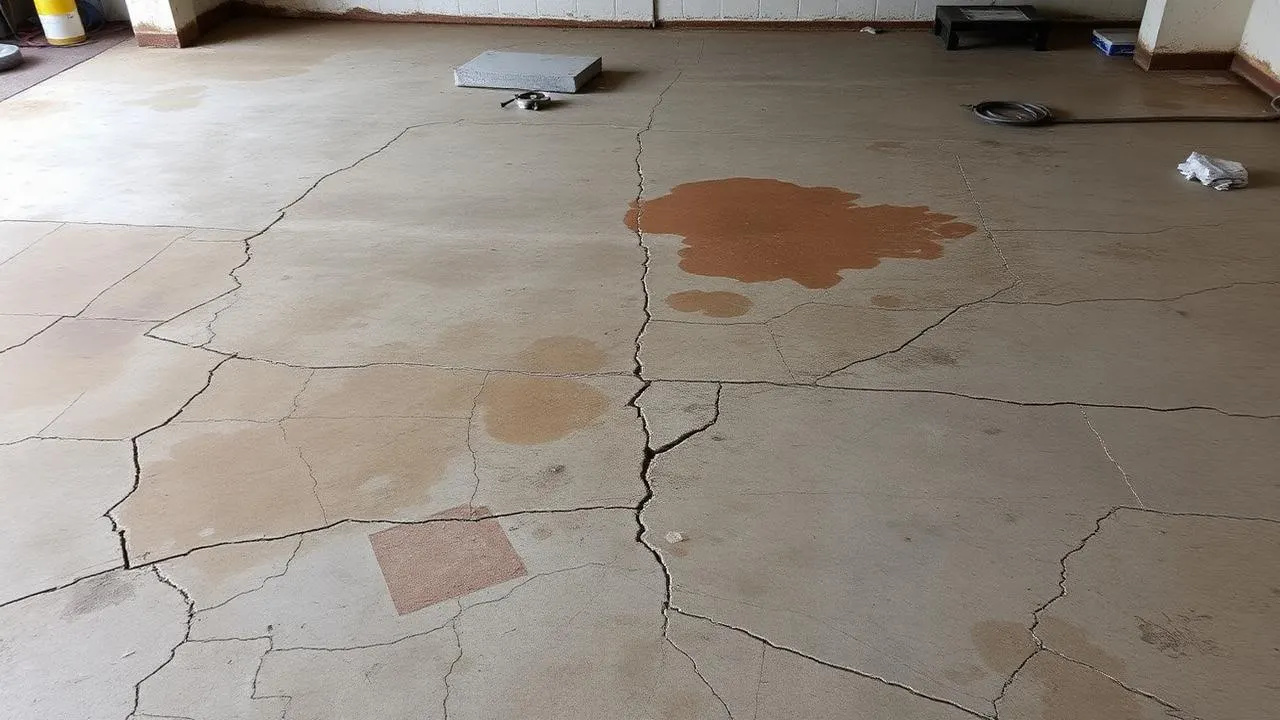
5 Signs Your Garage Floor Needs Resurfacing
Ready to get started?
Call (904) 300-1558 or request a free, no-obligation quote — we typically respond the same day.
5 Signs Your Garage Floor Needs Resurfacing
Cracks, stains, and dusting are just the beginning. Learn when it's time to invest in a new garage floor coating.
Your garage floor takes more abuse than almost any other surface in your home. Between car traffic, chemical spills, heavy tools, and Florida's relentless humidity, concrete degrades faster than most people realize. The good news: catching the warning signs early can mean a simple recoat instead of a tear-out-and-replace job down the road.
Here are the five signs it's time to resurface, followed by Jacksonville-area repair options and a decision matrix to help you choose between spot repair, resurfacing, and full replacement.
1. Concrete Dusting
Run your finger across the surface. If it comes back gray and chalky, your concrete is "dusting" — the surface paste is breaking down and releasing powder. This happens as the top layer erodes over time and is especially common in Florida where moisture constantly moves through the slab. Dusting means the wear surface is already past its usable life; a densifier or coating is the only real fix.
2. Pitting and Spalling
Small divots (pitting) or larger chunks flaking off (spalling) indicate that the surface has been compromised. Road salt carried in on tires — yes, even in Florida during winter road trips — chloride from coastal air, and chemical exposure accelerate this. Once you can catch a fingernail in a pit, water and oil are getting into the slab and freeze-thaw or salt attack will keep widening it.
3. Persistent Stains
Oil and chemical stains that won't come out have penetrated into the porous concrete. No amount of pressure washing will fix this. A proper coating seals the surface and prevents future staining — and for detached garages, it also stops odors from soaking into the slab.
4. Visible Cracks
Hairline cracks under 1/8" are normal in Florida concrete due to slab shrinkage and heat cycling. But if they're growing wider or deeper, showing vertical displacement (one side higher than the other), or leaking moisture after rain, they need to be addressed before a coating is applied. Ignoring structural cracks leads to moisture infiltration, coating failure, and eventually slab movement.
5. Previous Coating Failure
If you can see areas where an old coating has peeled, bubbled, or worn through, the underlying surface needs proper prep before recoating. This is by far the most discussed issue on Reddit's r/HomeImprovement, and it's almost always caused by skipping diamond grinding or ignoring moisture testing. See our full guide on fixing a peeling epoxy garage floor.
Repair Options by Damage Type (Northeast Florida)
Every slab is different, but these are the fixes we typically recommend across Jacksonville, St. Augustine, and Palm Coast:
| Damage Type | Fix |
|---|---|
| Surface dusting only | Densifier + polyaspartic top coat |
| Light pitting (<1/8" deep) | Grind, patch, color-flake system |
| Moderate spalling + stains | Full grind, polymer patch, flake or metallic |
| Structural cracks (1/8"–1/2") | Route, epoxy-fill, then coat |
| Failed old coating | Mechanical removal + new system |
| Slab replacement | Demo + new pour + coating |
Repair planning includes standard diamond grinding, moisture testing, and a polyaspartic top coat. Metallic systems, extra colors, and detached-garage access can add to the scope.
Resurface vs. Replace: The Decision Matrix
Most homeowners don't need to replace the slab. Use this matrix to figure out which lane you're in:
| Condition | Resurface (Coating) | Repair + Coat | Replace Slab |
|---|---|---|---|
| Dusting, no cracks | ✅ Best option | — | — |
| Pitting, stains, hairline cracks | ✅ Best option | — | — |
| Cracks 1/8"–1/2", no displacement | — | ✅ Best option | — |
| Cracks with 1/4"+ vertical offset | — | ⚠️ Possible with grinding | ✅ Consider |
| Slab is sinking / heaving | — | — | ✅ Required |
| Old coating peeling in patches | — | ✅ Best option | — |
| Slab is under 15 years old | ✅ | ✅ | ❌ Overkill |
| Slab is 40+ years old, crumbling | — | ⚠️ | ✅ Best option |
Rule of thumb: if less than 20% of the surface is compromised and the slab is structurally sound, resurfacing with a proper grind-and-coat system will outlast the concrete underneath.
When Resurfacing Is Not Enough
Call for a replacement quote — not a coating — if you see any of these:
- Vertical displacement across a crack greater than 1/4"
- Standing water pooling in the same low spot repeatedly (slope failure)
- Rebar visible or rust stains bleeding through the surface
- The slab rings hollow when tapped with a hammer over a large area
- Active moisture wicking with efflorescence (white powder) covering most of the floor
Coating over any of these traps the problem underneath and voids most manufacturer warranties.
What Happens During a Resurfacing Job
If your floor is a candidate for resurfacing, the process we use in Jacksonville is:
- Diamond grinding — removes 1/16" of the surface, opens the pores, kills dusting
- Crack and pit repair — polymer patching compound flush to the slab
- Moisture test — ASTM F2170 probe reading before any coating goes down
- Primer + base coat — pigmented epoxy or moisture-mitigating primer
- Broadcast (optional) — vinyl color flake or metallic pigment
- Polyaspartic top coat — UV-stable, chemical-resistant, back in service in 24 hours
If you're seeing two or more of the warning signs above, it's time to talk to a professional. Request a free quote and we'll evaluate your garage floor in person — including a moisture reading and a recommendation on resurface vs. replace.
Frequently Asked Questions
Ready to Transform Your Floor?
Get a free, no-obligation quote for your project in Jacksonville, St. Augustine, or Palm Coast.
Request a Free Quote