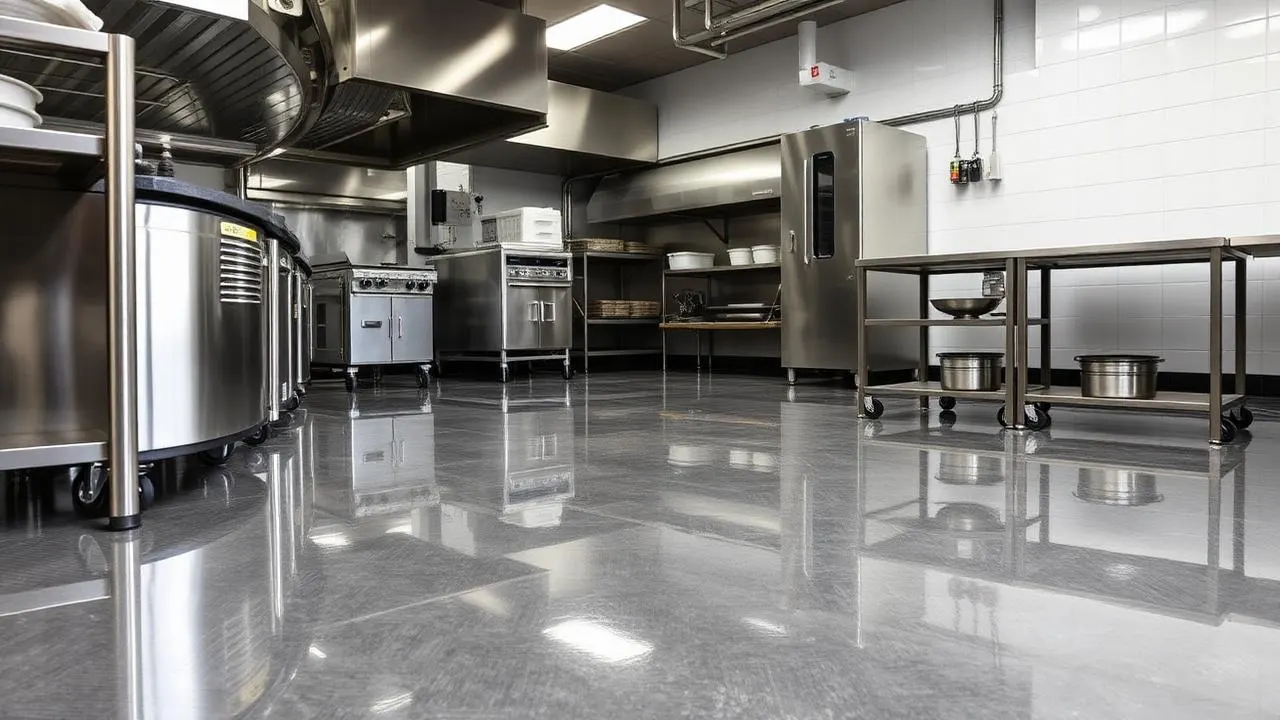
Commercial Kitchen Floor Coatings: What You Need to Know
Ready to get started?
Call (904) 300-1558 or request a free, no-obligation quote — we typically respond the same day.
Commercial Kitchen Floor Coatings: What You Need to Know
Commercial kitchens demand floor coatings that resist grease, heat, chemicals, and heavy foot traffic while meeting health codes.
Commercial kitchen floors face a unique combination of challenges: constant exposure to grease, oils, acidic foods, thermal shock from hot liquids, heavy foot traffic, and the ever-present risk of slip-and-fall accidents. On top of all that, they must meet strict health department requirements.
Health Code Requirements
The Florida Department of Business and Professional Regulation requires commercial kitchen floors to be:
- Smooth and easily cleanable — no cracks or crevices where bacteria can hide
- Non-absorbent — the surface must resist liquid penetration
- Properly sloped to floor drains
- In good repair — damaged floors can result in citations
Bare concrete fails on almost every count. It's porous, absorbs grease, harbors bacteria, and deteriorates rapidly in a kitchen environment.
Best Coating Options for Kitchens
Urethane Cement (Our Top Pick)
Urethane cement coatings are specifically designed for food and beverage environments. They offer:
- Thermal shock resistance (can handle boiling water and steam cleaning)
- Exceptional chemical resistance to organic acids, fats, and cleaning agents
- Built-in anti-microbial properties
- Outstanding slip resistance with textured finishes
- Typical lifespan of 15-20+ years
Epoxy with Urethane Topcoat
A more budget-friendly option that still delivers excellent performance:
- Good chemical resistance
- Easy to clean and maintain
- Available with anti-slip aggregate additives
- Typical lifespan of 10-15 years
What to Avoid
Tile: While traditional, grout lines are virtually impossible to keep sanitary. They harbor bacteria, mold, and grease. The r/KitchenConfidential subreddit is full of chefs complaining about tile floors.
Uncoated concrete: Absorbs everything, impossible to properly sanitize.
Cheap epoxy kits: Not formulated for the thermal and chemical demands of a commercial kitchen.
Planning Your Kitchen Floor Project
Timing is critical for commercial kitchens. The floor must be installed during a closure or slow period since our coating system is fully cured in 1–2 days. We work with restaurant owners to minimize downtime and schedule installations during planned closures.
Need a kitchen floor coating? Request a quote and we'll design a system that meets health codes and your budget.
Frequently Asked Questions
Ready to Transform Your Floor?
Get a free, no-obligation quote for your project in Jacksonville, St. Augustine, or Palm Coast.
Request a Free Quote